For now, Students for Fair Admissions has but one goal in mind: to bring race-based college admissions to an end.
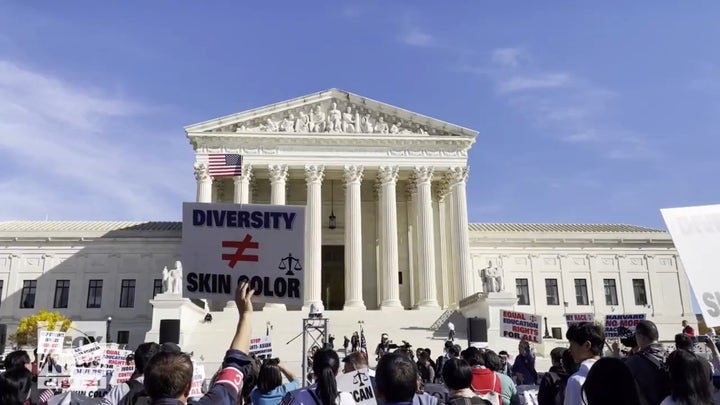
The affirmative action practice that has allegedly sidelined high-achieving Asian Americans now sits before the U.S. Supreme Court, awaiting a decision that, depending on the outcome, could alter the review process for college applications for the foreseeable future.
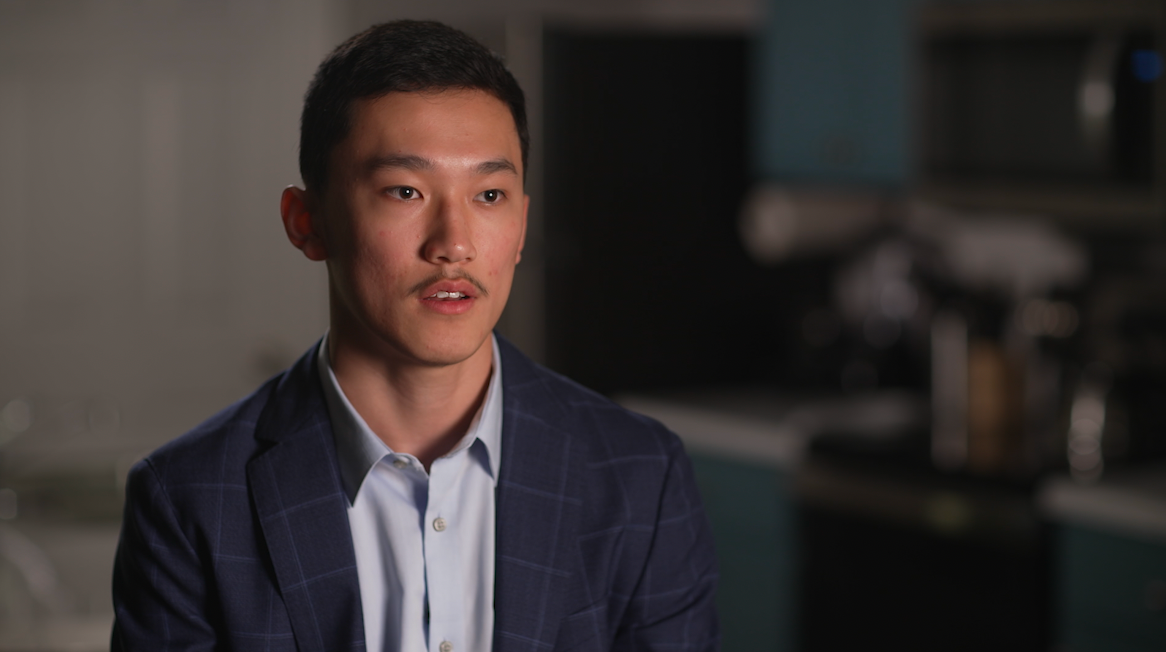
Its fate could also weigh heavily on the academic futures of people like 18-year-old Jon Wang, a Florida native who scored a 1590 out of 1600 on the SAT, with a perfect score on the math section. Combined with a 4.65 high school GPA, most would see him as a shoo-in for any elite university.
Somehow, the numbers still weren’t high enough.
But the rejection letters didn’t come without warning. Wang told Fox Nation he talked to friends and school guidance counselors going into the application process, and they all issued a bizarre warning.
“They all told me that it’s tougher to get in, especially as an Asian American. I just took it as gospel,” he said.
Wang, the child of two first-generation Chinese immigrants, is one of the people behind the plaintiff group taking on Harvard University and the University of North Carolina — two institutions whose race-based admissions practices have emerged at the epicenter of affirmative action practices for public and private institutions.
At stake in the Harvard case is whether the university violated Title VI of the Civil Rights Act by discriminating against Asian-American applicants. The UNC case, in contrast, looks at that school’s unwillingness to adopt a “race-neutral alternative.”
Either of the two cases could overturn 2003 precedent case Grutter v. Bollinger, wherein the court ultimately ruled that the use of race as an admissions factor was not unconstitutional as long as it was narrowly tailored to further the compelling interests of obtaining the educational benefits available in a diverse student body.

A passage from its book “Cracking College Admissions” notes that the high success of many Asian-American students has generated concerns among some schools who allege there are “too many” on their campuses.
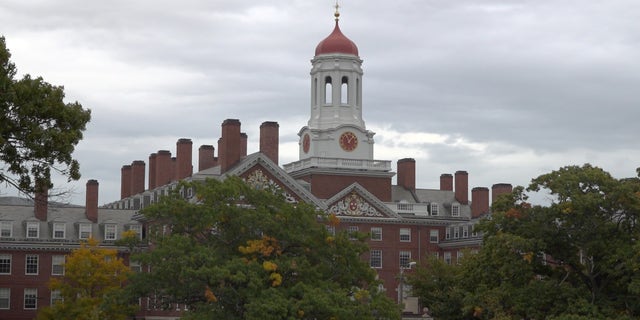
The two Supreme Court cases in subject deal with the admissions policies of Harvard and the University of North Carolina at Chapel Hill. (Fox News)
As explored in the Fox Nation special, the book says applying to college as an Asian American could be a “distinct disadvantage” at many elite schools. It also instructs applicants to refrain from including a photo of themselves in their application and withhold optional answers about ethnic background, if possible, as well as to avoid writing admissions essays about the significance of identifying with two cultures.
“I was scared of getting backlash on social media for it [raising awareness about unfair admissions],” Wang said. “For fighting for what I think is a really important issue.”
Wang also found a home at the Georgia Institute of Technology — better known as Georgia Tech — a high-profile Atlanta-based university that specializes in engineering and other STEM degrees.
Despite the risk of backlash in his career and elsewhere, he said he’s never going to stop fighting for the right cause and for future generations of Asian Americans.
“I feel like, if I’m looking back, 10 or 20 years from now, if I didn’t do it [speak up], I’d be pretty upset with myself,” said Wang.