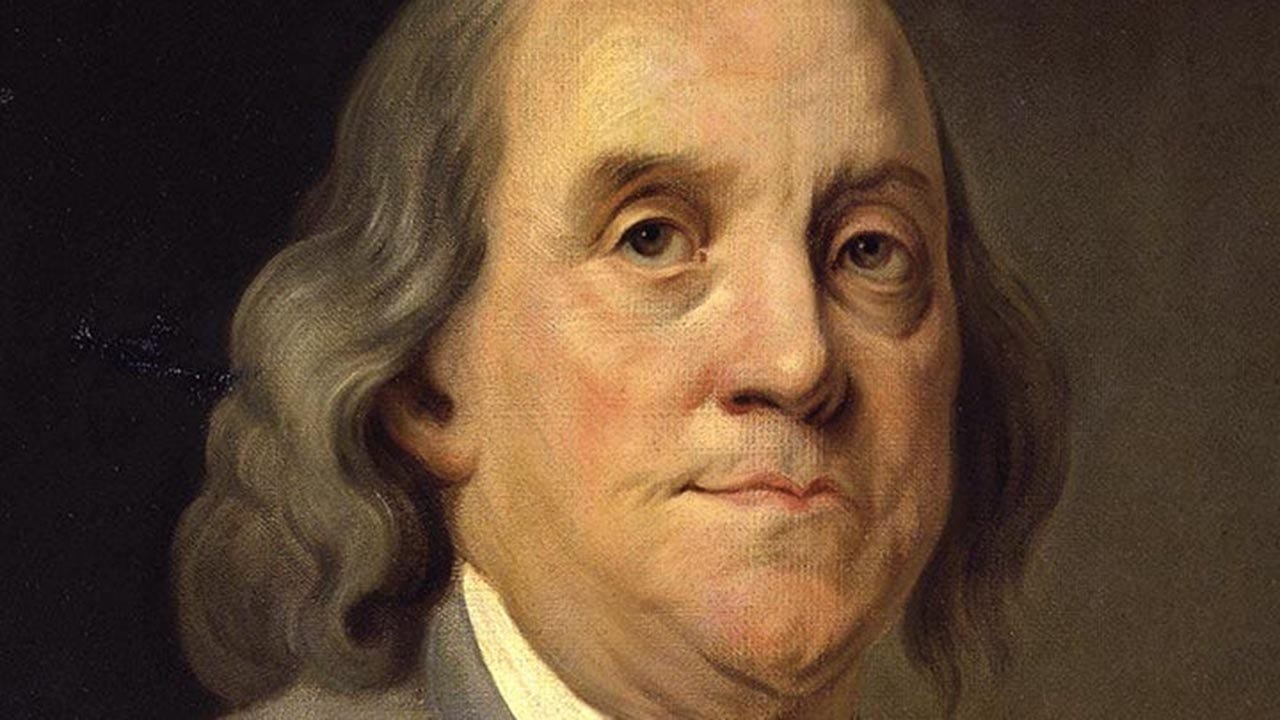
On this day in history, June 10, 1752, Benjamin Franklin is reported to have flown a kite during a thunderstorm, with a goal of collecting ambient electrical charge in a Leyden jar — a container that could store an electrical charge for later use.
This potentially would enable him to demonstrate the connection between lightning and electricity.
Franklin showed an interest in the subject of electricity in the mid-1740s when much was still unknown on the topic. For almost a decade he conducted electrical experiments, notes History.com.
Franklin coined a number of terms still used today in this field, including battery, conductor and electrician, and he is known for other important inventions such as the lightning rod.
Franklin’s son, William, reportedly assisted him with the experiment.
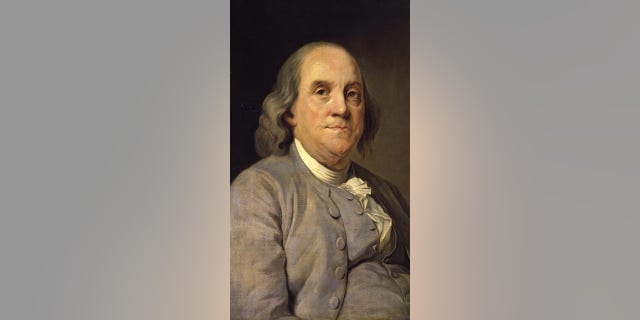
A portrait of Benjamin Franklin by Joseph-Siffred Duplessis, the National Portrait Gallery, 1783. (Getty Images)
Despite a common misconception, Franklin did not discover electricity during this experiment — or at all, for that matter, according to Philadelphia’s Franklin Institute.
“Electrical forces had been recognized for more than a thousand years, and scientists had worked extensively with static electricity. Franklin’s experiment demonstrated the connection between lightning and electricity,” the institute notes.
After his presumed successful demonstration, Franklin continued his work with electricity, going on to perfect his lightning rod invention, The Franklin Institute notes.
“In 1753, he received the prestigious Copley Medal from the Royal Society, in recognition of his ‘curious experiments and observations on electricity,’” says this source.
In 1723, after a dispute with his brother, he left Boston and moved to Philadelphia, where Franklin continued his work as a printer. While in Philadelphia, he enjoyed business success, publishing the Pennsylvania Gazette and Poor Richard’s Almanac, a series of “homespun proverbs advocating hard work and honesty in order to get ahead,” says History.com.
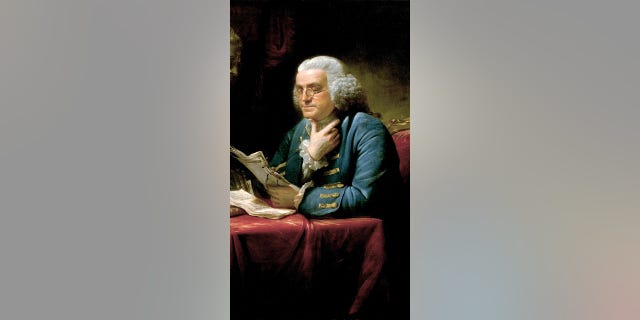
Portrait of Benjamin Franklin by David Martin (oil on canvas on panel from the White House collection, Washington, D.C.), circa 1767. (Getty Images)
“While he may have been in London as chief colonial diplomat, his time here encompassed much more than politics,” it also notes.
Benjamin Franklin first visited London as a teenage printer in the mid-1720s and stayed for 18 months, according to Mountvernon.org.
“He returned in 1757 as the most famous American in the world,” the site notes.
Beyond scientific achievements, including the ‘key in a thunderstorm’ experiment, his role as a statesman extended for four decades.
CLICK HERE TO SIGN UP FOR OUR LIFESTYLE NEWSLETTER
“He served as a legislator in Pennsylvania as well as a diplomat in England and France, and Franklin is said to be the only politician to have signed all four documents fundamental to the creation of the U.S.: the Declaration of Independence (1776), the Treaty of Alliance with France (1778), the Treaty of Paris (1783), which established peace with Great Britain and the U.S. Constitution (1787),” according to History.com.