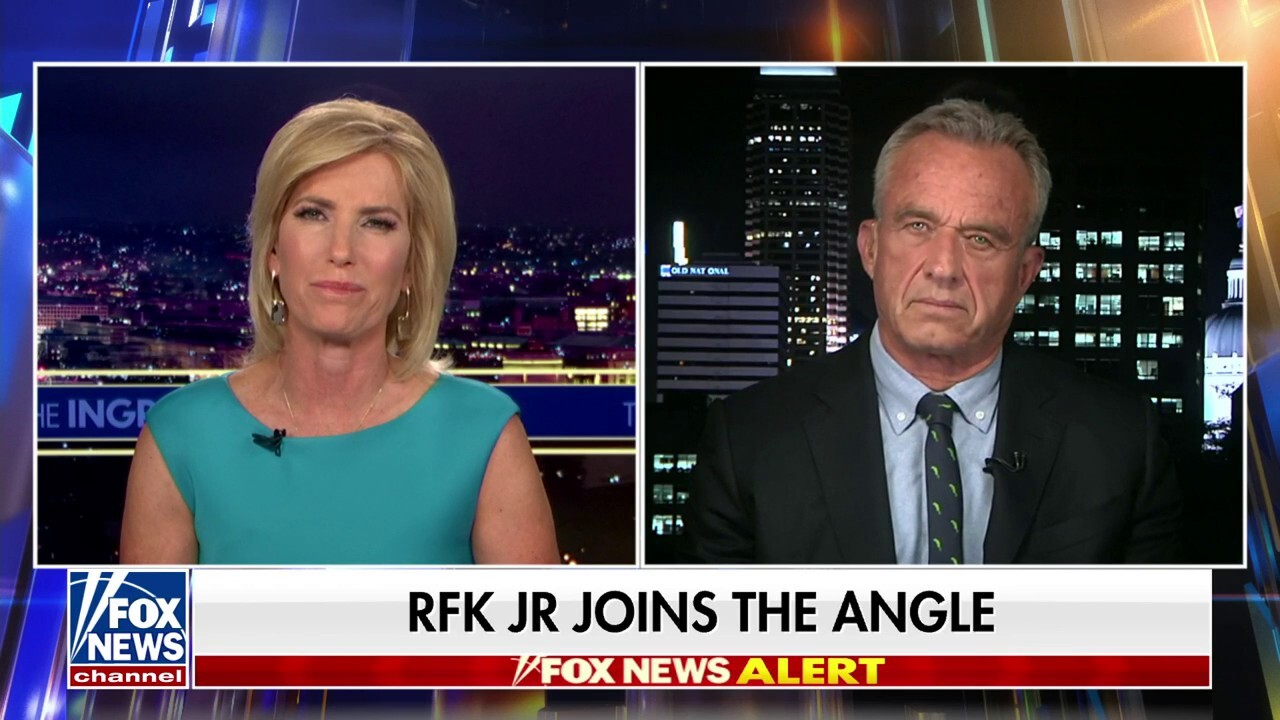
Democratic presidential candidate Robert F. Kennedy Jr. warned that U.S. leaders have potentially set an “ugly precedent” that hearkens back to the Civil War when President Lincoln was judicially admonished for suspending habeas corpus.
Kennedy told “The Ingraham Angle” during a discussion on the potential for external forces to press for a globalized, restrictive response to the next pandemic, that the U.S. should stand up against such a possibility.
“Those efforts already being made. But I’m not as worried about the [World Health Organization] as I am about our own government, because we’ve now established a precedent in this country — they suspended the First Amendment: religion; freedom of association when they did the lockdowns,” he said.
“[They restricted] freedom of speech. They banned jury trials against vaccine companies – that’s [a violation of] the Seventh Amendment. They abolished property rights [which violates the] Fifth Amendment [when] they closed 3.3 million businesses with no due process, no just compensation, although there was no pandemic exception in the United States Constitution…”
“So now we have this very, very ugly precedent, Laura – the government has withdrawn those mandates now, but they have not said ‘we’re never going to do it again’ — And there’s a whole pipeline of new emergencies, whether it’s terrorism or all these new diseases,” Kennedy said.
RFK JR DOUBLES DOWN ON ALLEGATION CIA INVOLVED IN UNCLE’S ASSASSINATION
He warned that, given the precedent set by liberal governors and federal agencies, the government can simply declare “oh, it’s an emergency – the Constitution is now suspended.”
Kennedy pointed to Lincoln, who regionally suspended habeas corpus in part because the seat of the Union Government – Washington – was surrounded by slaveholding states.
While Virginia was part of the Confederacy, Maryland never seceded, but secessionist sentiment ran high there. Lincoln’s eventual assassin, Confederate sympathizer John Wilkes Booth, hailed from Bel Air, Md.
As Kennedy explained, Supreme Court Chief Justice Roger Taney – a Marylander himself – issued his ‘ex parte Merryman’ writ, challenging Lincoln’s ability to do so.
Later in the interview, host Laura Ingraham asked if Kennedy would consider – should the GOP defeat the Democratic nominee – serving in a Republican administration.
Kennedy said he “would think about that” because he could do “a lot of good for the country” in the Department of Health & Human Services.