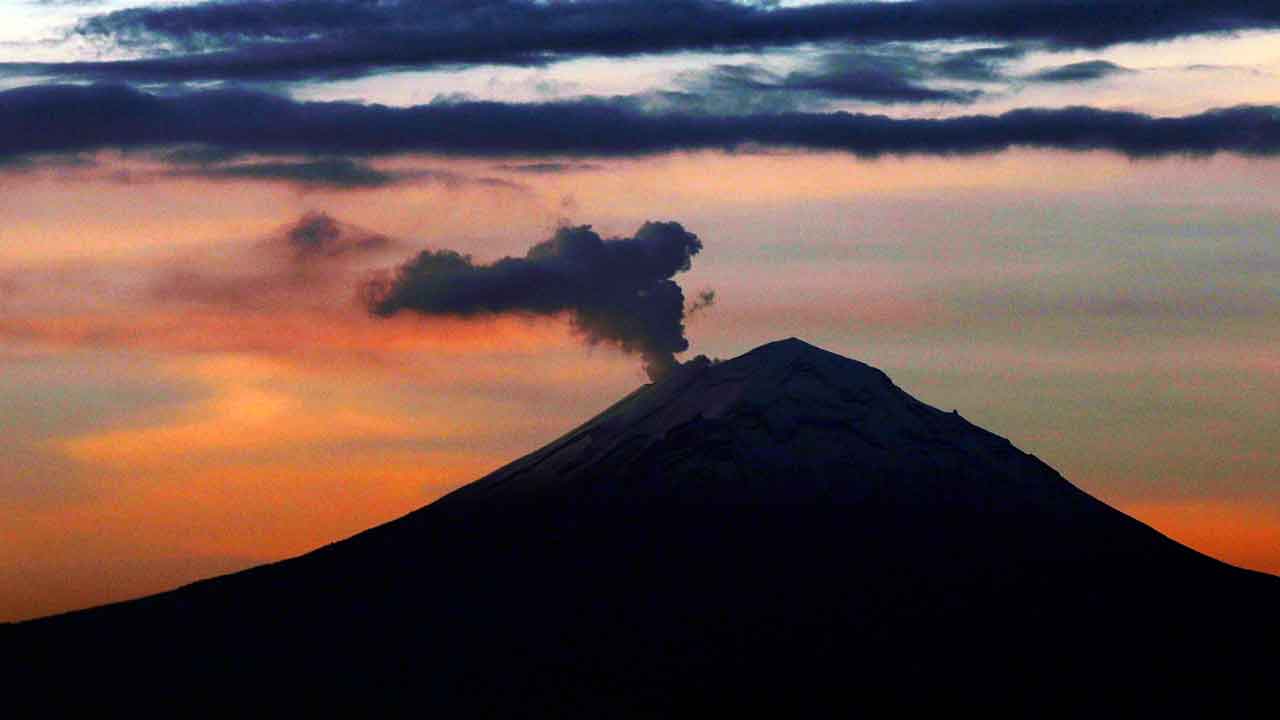
Mexico’s Popocatepetl volcano rumbled to life again this week, belching out towering clouds of ash that forced 11 villages to cancel school sessions.
The residents weren’t the only ones keeping a close eye on the towering peak. Every time there is a sigh, tic or heave in Popocatepetl, there are dozens of scientists, a network of sensors and cameras, and a roomful of powerful equipment watching its every move.
The 17,797-foot volcano, known affectionately as “El Popo,” has been spewing toxic fumes, ash and lumps of incandescent rock persistently for almost 30 years, since it awakened from a long slumber in 1994.
The volcano is 45 miles southeast of Mexico City, but looms much closer to the eastern fringes of the metropolitan area of 22 million people. The city also faces threats from earthquakes and sinking soil, but the volcano is the most visible potential danger — and the most closely watched. A severe eruption could cut off air traffic, or smother the city in clouds of choking ash.
On a recent day, researcher Paulino Alonso made the rounds, checking the readings at the command center run by Mexico’s National Disaster Prevention Center, known by its initials as Cenapred. It is a complex task that involves seismographs that measure the volcano’s internal trembling, which could indicate hot rock and gas moving up the vents in the peak.
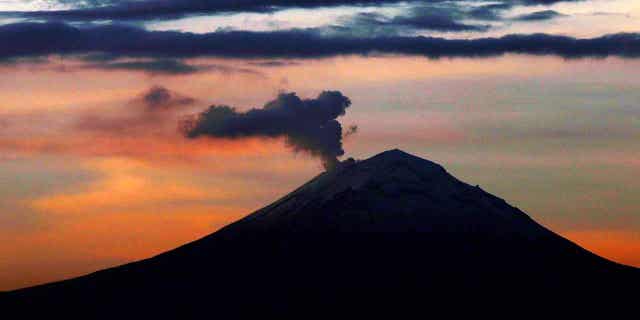
A plume of ash and steam rises from the Popocatepetl volcano, as seen from Mexico City, on June 19, 2019. “El Popo” rumbled to life again this week spewing out towering clouds of ash that forced 11 villages to cancel school sessions. (AP Photo/Marco Ugarte, File)
Monitoring gases in nearby springs and at the peak — and wind patterns that help determine where the ash could be blown — also play a role.
ALASKA VOLCANO DORMANT FOR A CENTURY DELIVERING OMINOUS WARNING SIGNS: ‘SIGNIFICANT UNREST’
For most of the years since the stoplight was introduced, it has been stuck at some stage of “yellow.” The mountain sometimes quiets down, but not for long. It seldom shoots up molten lava: instead it’s more the “explosive” type, showering out hot rocks that tumble down its flanks and emitting bursts of gas and ash.
The center also has monitors in other states; Mexico is a country all too familiar with natural disasters.