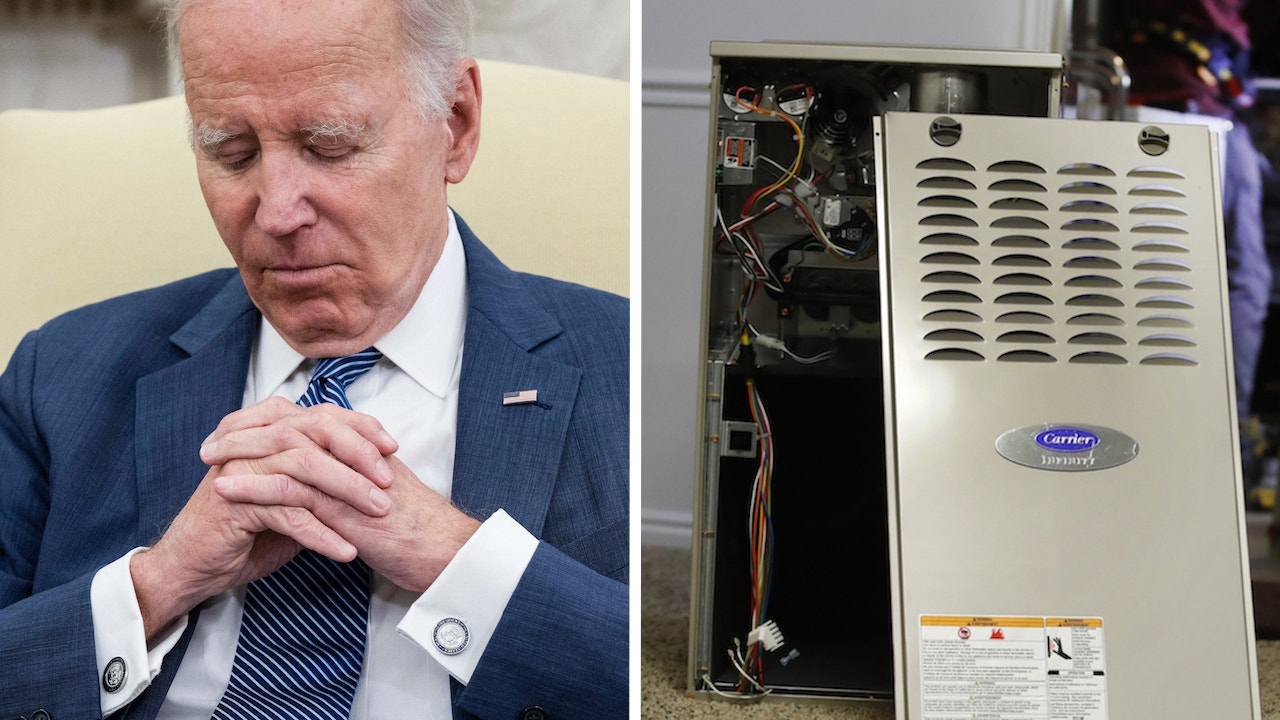
The Biden administration is expected to soon finalize regulations restricting which home gas-powered furnaces consumers are able to purchase in the future.
According to experts, the regulations — proposed in June 2022 by the Department of Energy (DOE) — would restrict consumer choice, drive prices higher and likely have a low impact on greenhouse gas emissions. The agency could finalize the rules targeting residential gas furnaces, which more than 50% of American households rely on for space heating, at any point over the upcoming weeks.
“This is a classic example of one size not fitting all,” Ben Lieberman, a senior fellow at the Competitive Enterprise Institute, told Fox News Digital in an interview. “Every home is different, every homeowner is different and people are best off having a wide range of choices. They can work with their contractor to make the best decision for their home and their circumstances.”
“The efficiency standard would effectively outlaw non-condensing furnaces and condensing alternatives would be the only ones available,” Lieberman said. “Those are more efficient, but they cost more. And installation costs could be a big problem for some houses that are not compatible with condensing furnaces.”
BIDEN ADMIN CRACKS DOWN ON AIR CONDITIONERS AS WAR ON APPLIANCES CONTINUES
“There are some really technical reasons why this is such a concerning rule,” Richard Meyer, the vice president of energy markets, analysis and standards at the American Gas Association (AGA), told Fox News Digital in an interview. “It has to do with the ability for consumers to be in compliance with this new efficiency standard.”
“They’re going to have to, in many cases, install new equipment to exhaust gas out of their home. These higher efficiency units, or so-called condensing units — a lot of consumers have them in their home, but a lot of consumers don’t. So, this rule would require additional retrofits for a lot of consumers. And those retrofits can be extremely cost prohibitive.”
“AGA’s primary concern is, one, removing that option, that choice, from consumers,” he continued. “Two, in many cases, natural gas remains the lowest cost and even lowest-emissions resource for many consumers. A lot of the policies we’re seeing that are designed to restrict natural gas may end up having a counterproductive result and could increase costs to consumers and could increase the emissions associated with the energy use by those consumers.”
BIDEN ADMIN MOVING FORWARD WITH LIGHT BULB BANS IN COMING WEEKS
In its announcement last year, the DOE claimed the efficiency standards would save the average family about $100 a year and reduce carbon emissions by 373 million metric tons and methane emissions by 5.1 million tons.
The expected rule, meanwhile, comes amid a blitz of DOE rulemaking targeting appliance efficiency standards. Over the last several months, the DOE has unveiled new standards for various appliances including gas stoves, ovens, clothes washers, refrigerators, air conditioners and dishwashers.
Under the DOE’s mission statement, the Unified Agenda highlights advancing “energy efficiency and conservation” as one of five central pillars. Broadly, Democrats and environmentalists have argued that electrification, banning natural gas hookups and implementing strict energy efficiency standards could help accelerate emissions reductions.